

Understanding Metric vs Imperial Measurement for PVC Fittings
Plastic pipe sizes in the UK are measured in two ways:
• Metric, also referred to as millimetres (mm) and
• Imperial, also referred to as inch (").
The outside diameter of the pipe always remains constant, irrespective of the measurement system, it is the bore (the centre of the pipe) which changes depending on the wall thickness - directly correlating to pressure rating.
What are the differences between Imperial and Metric in the pipe world?
In terms of joining methods, robustness and chemical resistance – both Imperial and Metric pressure pipe systems are exactly the same. There are no differences at all in functionality and performance as it is the same PVC raw material used for both. The variance is not in the composition of the material, but in the size designation and manufacturing standards.
The Metric System in PVC pipe manufacturing
The Metric system is the more modern of the two forms of measuring, making use of measurements such as millimetres, centimetres and metres etc.
This system is commonly used in Europe and is becoming increasingly popular in the UK. In the pipe manufacturing industry, sizes are always referred to using the outside diameter (O.D) of the pipe, e.g. 20mm OD PVC PN16 = 20mm OD x 17mm ID (1.5mm w.t).
The Imperial System in PVC pipe manufacturing
The Imperial system is much older than the Metric System and is well established in the UK and the USA.
The Imperial system uses measurements such as inches, feet and yards. Sizes are always referred to using the nominal bore (N.B) of the pipe. The Imperial system of size referencing uses nonspecific dimensions to differentiate between sizes. This originates from historical steel pipe sizes and has not changed as PVC became more popular.
There is no correlation between the size reference of the pipe and the actual physical dimension of the pipe, e.g. 1/2" N.B* PVC Class E = 21.4mm OD x 18mm ID* (1.7mm w.t) *1/2" N.B* = 12.5mm.
As is demonstrated above, there is no correlation between the referenced dimension of half inch (12.5mm) and the actual dimension of the pipe (18mm).
Whilst both systems can be interchanged using a range of adaptor fittings such as Inch/Metric Adaptor Sockets and Inch/Metric Adaptor Unions it is not common practise.
Metric and Imperial Threaded Fittings Fit Both
Threaded PVC fittings work in metric and imperial pressure pipe systems because they are essentially the same.
Fittings are always supplied referenced Imperial/Inch i.e. there is no such thing as a Metric/mm threaded fitting in pipework systems, enabling you to adapt from one system to another with ease.
We've clearly defined this by listing both the Metric and Imperial sizes on our website.
Imperial vs Metric Pipe Sizes
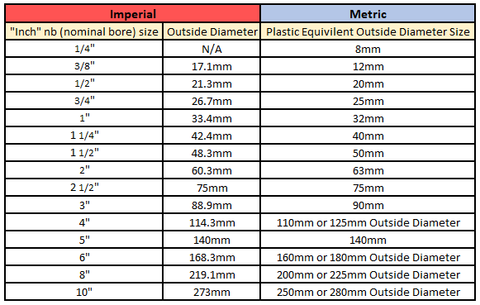
Have a glance at our Imperial to Metric approx. size comparison chart below.
Shop Our PVC Fittings
Whether you're working with metric or imperial pipe systems, we stock a comprehensive range of PVC fittings for both. Here are some of our most popular products:
- PVC-U Double Union Ball Valve (Metric) – Ideal for metric pipe systems requiring reliable isolation.
- PVC-U Union Plain (Metric) – Essential for easy pipe disconnection in metric systems.
- PVC-U Union Plain (Imperial) – The imperial equivalent for UK and US standard pipe systems.
- PVC-U Reducing Bush (BSP Threaded) – Perfect for adapting between different pipe sizes in both systems.
- PVC-U Reducing Bush (Plain Imperial) – For imperial plain-end pipe size reductions.
Always Obtain Professional Advice
If you wish to know more then why not seek professional advice from our team of experienced experts? It is always better to be safe rather than sorry when it comes to pipe systems.
If you are still unsure whether you have the right system in place, or require some simple advice on your measurement requirements, give us a call today. Alternatively, you can reach us on our contact page or email us directly on Send Mail
What PVC do we offer?
We pride ourselves on supplying premium quality PVC pressure pipe systems in both Metric and Imperial sizes. Our extensive product range includes:
• Pipes
• Fittings
• Valves
• Flanges
• Accessories
Our products can be used in a wide variety of basic applications, from simple garden water features to substantial projects in a variety of industries including:
• Industrial Factories
• Fish Farms
• Theme Parks
• Food Factories
• Aquariums
• Water & Sewage Treat
• Swimming Pools
• Water Features
• Breweries
• Zoo's
• Fabricators
The PVC pipe sizes in the UK are all measured by either Metric or Imperial so here at AK Valves you can rest assured that we can cover all your PVC needs.
Introduction to Measurement Systems
When working with PVC fittings, it's crucial to understand the differences between metric and imperial measurement systems. The metric system uses units like centimeters and millimeters, while the imperial system uses inches and feet. This can become confusing for DIY enthusiasts and professionals alike. Therefore, knowing how each system functions can help ensure that your PVC fittings fit perfectly and perform well, which is essential because improper fittings can lead to leaks and failures.
Advantages of Metric Measurements
Metric measurements are often seen as simpler and more logical than imperial measurements. Because metric units are based on powers of ten, they allow for easier calculations and conversions. This straightforwardness is beneficial when measuring or cutting PVC fittings accurately. Additionally, many countries predominantly use the metric system, so having fittings in these measurements can be advantageous, especially if you are sourcing materials internationally.
Common Use Cases for Imperial Measurements
On the other hand, the imperial system has been widely used, especially in the United States. Many plumbing codes and standards rely on imperial measurements, which means that contractors working in these areas will predominantly use fittings measured in inches. This can present challenges when trying to convert between both systems. Understanding when to use imperial measurements can enhance your project's compliance with local regulations, making it easier to find compatible parts.